
 Հայերեն
This World Nature Conservation Day, We’re Celebrating Hope, Action, and Nature
Protecting Armenia’s Nature: FPWC’s Achievements on World Nature Conservation Day July 28 marks...
News, Նորություններ
The Caucasus Wildlife Refuge (CWR), which encompasses around 30,000 hectares, is the first privately protected area in the South Caucasus.
The CWR is managed by the Foundation for the Preservation of Wildlife & Cultural Assets (FPWC) since 2011. Being the habitat of a number of southern Caucasian species, the CWR territory is an area of crucial importance buffering Khosrov Forest State Reserve (IUCN Ia category). CWR is home to a rich diversity of endangered wildlife and rare native flora, serving as a vital refuge in the South Caucasus. Its protected landscapes provide safe habitat for threatened species such as the Caucasian leopard, Armenian mouflon, Bezoar goat, Brown bear, and numerous endangered and vulnerable bird species, while also supporting a wide range of endemic and native plant communities adapted to the region’s unique climate and terrain.The refuge is a safe haven for many rare species, such as Brown bears, Bezoar goats, Armenian Vipers, Bearded Vultures and endangered Persian leopard.

At CWR, annual and seasonal biodiversity monitoring is conducted throughout the refuge, focusing on large mammals, raptor bird species, and endemic flora. Carried out by conservation professionals and rangers, this work is enhanced by advanced remote sensing technologies, high-resolution online cameras, and other cutting-edge monitoring tools.
CWR stands as one of Armenia’s important conservation landscapes, sustaining wildlife populations through protected habitats, scientific monitoring, and continuous on-the-ground stewardship. These efforts reinforce the refuge’s role in preserving biodiversity and maintaining healthy ecosystems in the region. Since the establishment of CWR, wildlife populations have grown in both size and range across the protected area, including key species such as the Bezoar goat, rown bear, Eurasian lynx, and Grey wolf.
Since 2013, when FPWC documented the first leopard sighting in Central Armenia in over 15 years, CWR has provided habitat for more than seven individuals. Among them is a resident male, Neo, who has established this landscape as his territory, shared with Khosrov State Reserve. This presence underscores the importance of CWR as a critical refuge and movement corridor for the conservation of the Persian leopard.
Reforestation and habitat restoration are key pillars of CWR’s biodiversity approach. Through the recovery of native vegetation and the restoration of degraded landscapes, these efforts strengthen ecological connectivity, support the natural movement of wildlife, and create healthier conditions for native plant communities to thrive. By reinforcing the resilience and continuity of natural ecosystems, they contribute to the long-term conservation of the refuge’s flora and fauna.

CWR is dedicated to conserving Armenia’s unique flora and fauna through advanced technology and modern management approaches. Its biodiversity strategy draws on international experience, expert knowledge, and innovative tools supported by state-of-the-art equipment. This integrated model strengthens monitoring, improves protection, helps prevent illegal activities, and ensures the long-term preservation of its ecosystems.
At CWR, innovation supports the restoration of arid landscapes through field-based, adaptive solutions. By improving planting conditions, addressing water scarcity, and supporting the establishment of native and wild fruit trees, these approaches help restore degraded habitats, reinforce ecosystem resilience, and promote long-term ecological recovery.

CWR’s conservation approach extends beyond monitoring and habitat protection to the active engagement of local communities, whose support is essential to the long-term success of FPWC’s work. This collaboration contributes to sustainable rural development by creating permanent and seasonal employment, strengthening ecotourism opportunities, and supporting the growth of small and medium-sized local enterprises. Through this model, conservation becomes a shared effort that benefits both nature and people.
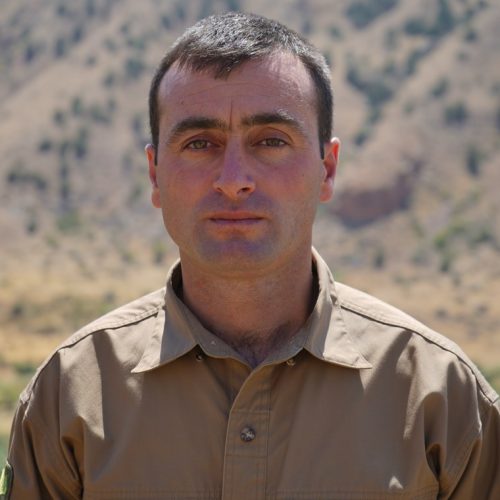
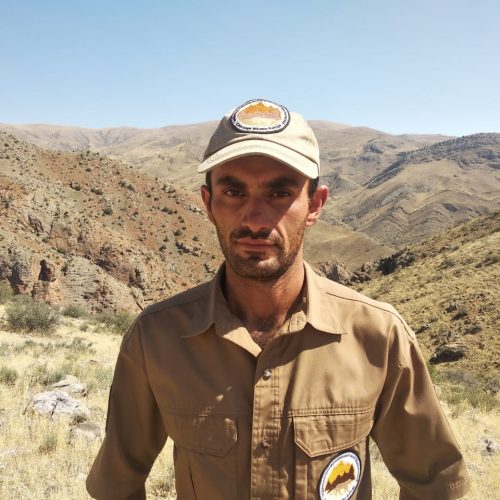
All the team of CWR is comprised of locals-the field rangers, eco-tourism guides, cooks and service personnel are all residents of the adjacent communities. The villagers are permanently supplying the Eco-Center with locally produced food and drinks, which helps the locals to generate additional income and promotes organic farming in villages.
The third component of development focuses on strengthening community infrastructure through the rehabilitation and modernization of essential services. This includes improving water supply networks, installing energy-efficient LED street lighting, introducing solar energy solutions, and renovating or rebuilding educational institutions in nearby villages.
Protecting Armenia’s Nature: FPWC’s Achievements on World Nature Conservation Day July 28 marks...
News, ՆորություններOn July 18, 2025, the UN Resident Coordinator in Armenia, Ms. Françoise Jacob, visited the...
News, ՆորություններLast week, our team at FPWC came together with our skilled rangers and GIS specialists to...
News, ՆորություններThe Caucasus Wildlife Refuge, the first privately protected area in the South Caucasus is...
News, ՆորություններAn important and symbolic event took place on the eve of the event dedicated to the 10th...
News, ՆորություններSorry, this entry is only available in Հայերեն....
ՆորություններThe FPWC tree planting project since 2016 have already provided good results. In this photos...
Նորություններ

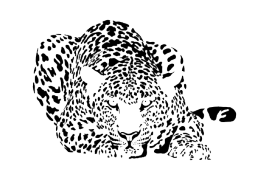
After spotting the traces of the Caucasian Leopard in CWR in May 2012, a monitoring project has been launched in CWR. New generation trap cameras have been installed in CWR to prove the existence of the animal, as well as to monitor its pathways and undertake respective conservation measures
In summer 2013, the carried works gave the first results-the leopard’s tail was caught on a trap-camera followed by its body footage in a full view. The Caucasian Leopard has chosen CWR as a safe haven and its existence is now proven. The biggest of the eight recognized sub species, the Caucasian leopards inhabit remote and mountainous areas, which make them very vulnerable to habitat fragmentation and isolation and they also face a variety of other threats across their range. These include reduction of prey species through poaching, loss of habitat caused by deforestation, over grazing by livestock, conflict with livestock owners, heavy military presence and fortification of borders and being hunted as trophies or for the fur trade
The project is aimed at securing the habitats and migration corridors of the species, preservation of its prey species, such as Bezoar goats and Armenian mouflons, as well expanding the cooperation with the South Caucasian countries to provide leopard’s safe migration across borders
The Caucasian leopard is included in Armenia’s Red book as “Critically endangered” CR C2a(i), as well as recorded in the IUCN Red list and categorized as “Endangered” . According to available data, during Soviet period-from 1950 to1972, around 75 leopards have been killed in the territory of Armenia drastically reducing their numbers to as few as 8-13 leopards remaining in the country
The WRC is the first center of its kind in Armenia dealing with rescue and rehab of red-listed species illegally held in captivity. In 2016, FPWC has signed a tripartite Memorandum of Agreement with the Ministry of Emergency Situations & Ministry of Nature Protection, expressing the willingness and readiness of parties to cooperate on abovementioned issues.
Within the frames of its mission, the WRC has addressed the issue of illegally kept red-listed brown bears in Armenia launching a long-term rescue project to tackle the widespread issue in the country. The project aims to establish long-term cooperation with international and local NGO’s and state bodies to come up with a comprehensive, multiple-staged solutions, including legislation changes, lobbying, establishment of sanctuaries and release centers for handicapped animals. The Center permanently organizes informational and educational campaigns against illegal wildlife trade, exploitation and cruel attitude towards animals, advocating for their welfare and overall wellness.

The latest initiative of reforestation in the CWR-the nursery, started in February 2016. The initiative is based on the existent species’ reproduction. The nursery mainly serves for testing the innovative technologies for the seedlings’ production. The closed root system of the seedlings’ production is considered the main method for the production of high-quality planting materials. The almond, apple, cherry, plum, pear and wayfaring (Viburnum) trees’ seeds have already been planted in 5000 containers due to this technology.
In addition, experiments are made to process the options of fillers in the seed plots. The water-absorbing polymer material called hydrogel is added to the different proportion mixture of peat and perlite. The measuring devices allow the monitoring of the main climatic conditions, which makes the working process evaluation rather easier.
Wooded areas don’t hold large space in the Caucasus Wildlife Refuge (CWR), however, they deserve special attention. For many centuries the juniper sparse forests and oaks used to be dense forests, which were almost deserted as a result of anthropogenic impacts.
During the scientific tours, the experts assessed the ecology of the area and the climatic conditions and developed a coordinated approach for further tree plantings in CWR, including identification of subspecies, soil characteristics and other important factors.
The Eco-Lodge in Urtsadzor is a co-working space and educational hub for scholars/scientists, additionally offering an eco-friendly accommodation for tourists and visitors. The Lodge organizes environmental trainings and seminars for the residents of neighboring communities, local schoolchildren and students. Annual summer schools of Sunchild eco-clubs are commonly held in the Eco-lodge as well. Moreover, the Lodge also serves as a venue for scientific conferences and eco-tourism development center. The building itself is a green model, constructed with environmentally friendly technologies. The hot water is supplied by solar panels and is then threated with a small-scale sewage station to prevent water resources pollution in the area.



Foundation for the Preservation of Wildlife and Cultural Assets (FPWC)
Khanjyan street 47/1, apt. 14, Yerevan 0001, Armenia
Yerevan 0001, Armenia